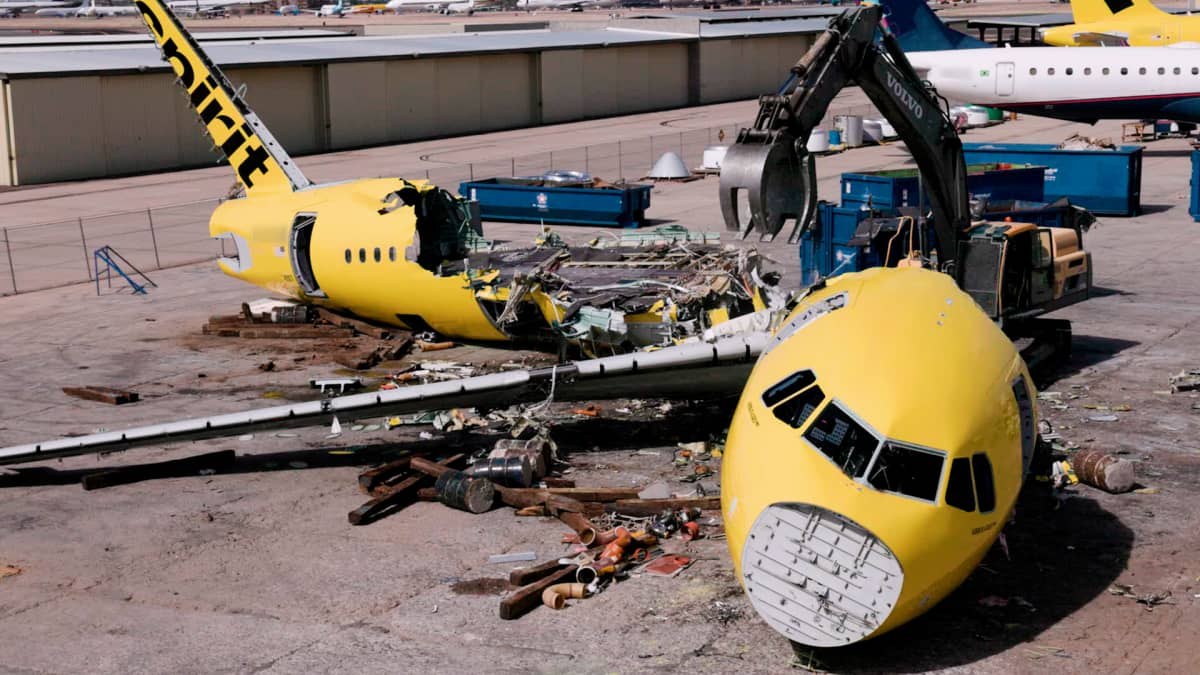
GOODYEAR, Ariz. — An Airbus A320neo, one of the world's most popular planes, rolled off the Mobile, Alabama, factory line in July 2022, painted bright yellow for its next destination: Spirit Airlines.
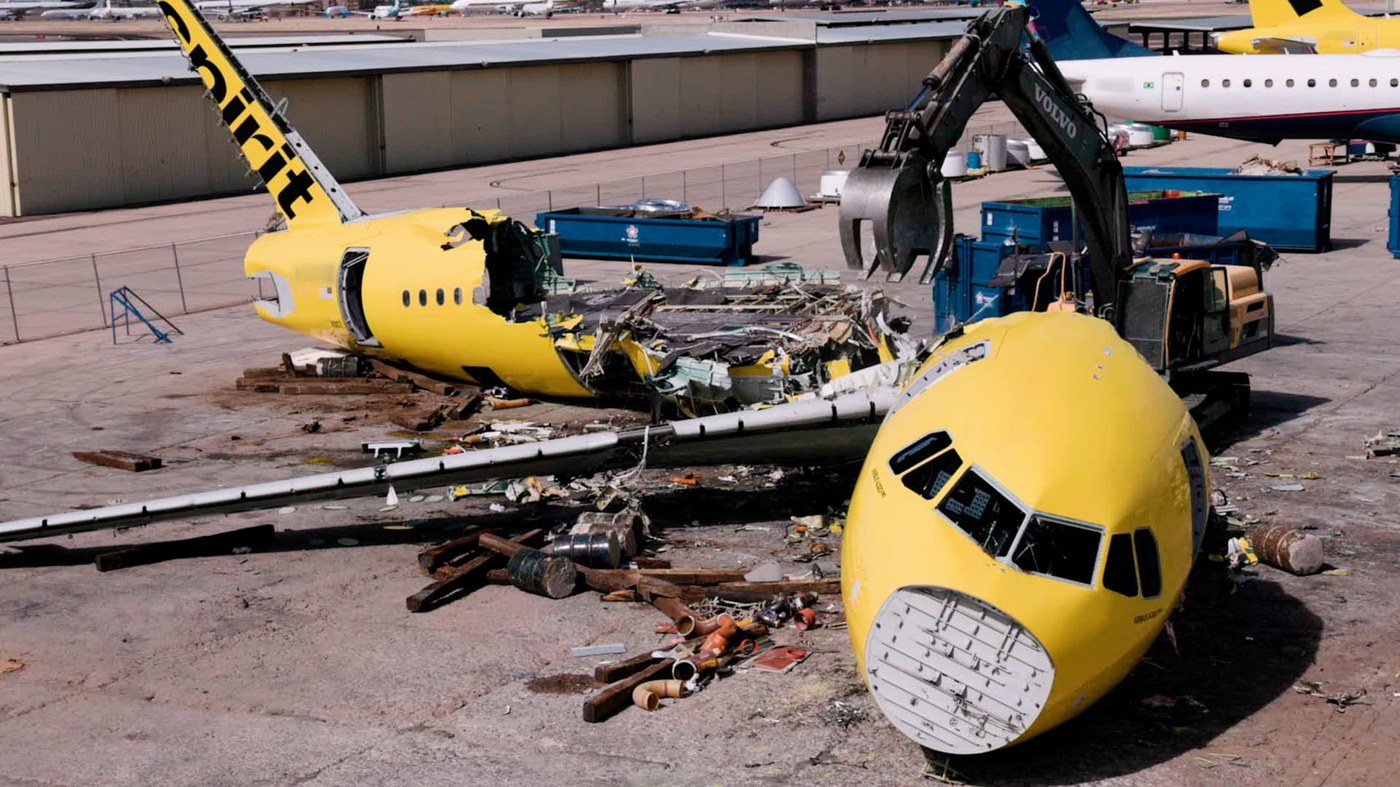
It was built to fly for decades. But this May, less than four years later, it was stripped for parts worth millions and crushed, the steel teeth of an excavator tearing through its fuselage at a facility on the outskirts of Phoenix.
More aircraft are getting dismantled years, if not decades, earlier than expected, industry executives told CNBC. It is the result of a shortage of parts, none more precious and expensive than aircraft engines, that has exasperated airlines and driven up costs for years.
Even after the engines are removed, firms are looking for parts as varied as landing gear and antennae to sell.
"It's the first time in my career that involved purchasing an aircraft that's less than five years since date of manufacture," said Bill Thompson, vice president who leads aircraft and engine acquisition for the Americas at aviation asset management and trading firm EirTrade Aviation, which bought the less than 4-year-old Airbus A320neo earlier this year.
He said the company paid "single-digit" millions each for that airplane and a similarly aged one, and it expects to make a profit from selling the more than 1,000 parts it took off them before they were crushed.
"I don't know if you're going to sell the coffee makers but you never know. Sometimes you do," he said.
'Don't fall in love with the metal'
Twenty-one newest-generation aircraft were torn down from June 2025 through this past August, according to aviation data and advisory firm IBA Group. The scrapped planes were 6.4 years old on average, and included mostly Airbus but also some Boeing planes. That compares with an average retirement age for narrow-body airplanes of 21.7 years, IBA said.
"Anytime that you end up with any period of market softness in aircraft availability, engine availability, it's going to cause investors to look at other options," said Simon Goodson, CEO of AerFin, a company that buys, sells, repairs and leases aircraft and parts. "We always say to our aircraft and engine traders, 'Please don't fall in love with the metal.'"
Hundreds of aircraft are retired each year as manufacturers ramp up production for airlines, so older planes are swapped out for newer, more fuel-efficient models.
But aside from retiring aging planes, some owners don't want to wait around for replacement parts or repairs on younger jets.
"A year might not sound that long, but does three or four years?" said Dave Querio, CEO of Ascent Aviation Services, a company that repairs, modifies, stores and disassembles aircraft, based in Marana, Arizona, outside of Tucson. "That's the issue for the aircraft that came in in '23, '24 and '25."
In some cases, owners can reap more for the parts than they can selling the plane or paying storage costs and waiting for it to get back in the air again.
Querio said he hasn't seen "the volume of younger aircraft being torn down as I'm seeing today."
Hot engine market
A major reason for the young retirements is the long wait and rising prices for jet engines.
One problem is that cutting-edge engines that burn hotter and use less fuel are coming up for maintenance far earlier than airlines expected.
The maintenance requests have kept engine repair and overhaul facilities backed up, from those owned by manufacturing giants GE Aerospace and RTX unit Pratt & Whitney to smaller, independent ones. Airlines and leasing firms have been hunting for spare parts and engines anywhere they can find them, like here in Goodyear, Arizona.
The trend has added more fuel to the already hot secondhand parts market. An engine fan blade could cost $50,000 or even more than $100,000 for bigger jets, Goodson said. Engines that power some Airbus A320neo aircraft have 20 of those blades. A disc for the engine, meanwhile, could cost between $1 million and $2 million.
An engine recall because of a manufacturing defect has backed up repair shops and grounded hundreds of Airbus planes around the world. Spirit Airlines bore the brunt of that problem in the United States, years before the airline collapsed.
The engine is made by Pratt & Whitney, which issued the recall in 2023 after discovering contaminated powdered metal used in making some parts. Those engines are worth close to $17 million this year at the high end, up 60% from the upper end of the range in 2019, according to IBA.
Airlines are removing some engines off retired planes to keep current aircraft flying while they wait for engines to come back from the shop.
"So you're just playing Legos and moving engines on and off aircraft," said Mike Stengel, a partner at AeroDynamic Advisory, an aerospace consulting firm.
The problems are driving up the cost to buy or rent one of the popular engines to record levels.
Renting one is ranging from about $160,000 to $180,000 a month, according to IBA data. A competing engine for the A320neo family made by CFM International, a joint venture of GE Aerospace and France's Safran, is far from a bargain, renting in a similar range of $130,000 to $180,000 a month.
Spirit Airlines' ghost planes
The problems with young retirements predate Spirit's collapse.
The 4-year-old Airbus plane that was torn down outside Phoenix in May is a key example. The aircraft was put in storage because of the engine recall, and it stayed until it was torn apart.
But the company's demise has brought more of its Airbus fleet to the market, forcing owners to figure out if it's worth the wait for engines or other parts.
CNBC visited AerSale's facility in Goodyear on a scorching day in late June, less than two months after Spirit collapsed, where dozens of the idle yellow planes were stored. It was so soon after the airline's demise that a former Detroit-based Spirit captain, Glenn Zecchin, popped in and asked about opportunities to ferry Spirit's aircraft to the desert, and to peek in on his former airline's planes.
"I knew the airplanes were there, and I wanted to see what happened," said Zecchin, who is now flying corporate jets.
A jet parked at the storage facility and maintenance hangar still had Spirit in-flight menus and safety cards in the bungee cord seatbacks. Pilot manuals were still in the cockpit.
Not all of these aircraft will be destroyed. Some companies that owned Spirit's planes before bankruptcy will just sell their parts, but some may keep the planes in storage. Other aircraft may go on to fly for other airlines, with potential carriers ripping out Spirit's tight 28-inch seat pitch for something roomier.
But as long as they're not flying, it means paying storage fees, which vary by aircraft type. Some planes in desert facilities — selected because the arid climate can preserve the aircraft better and avoid corrosion — can sit for decades.
Others won't make it back into the air if there's enough demand for the parts and too long of a wait to get the plane flying again.
"After you get rid of all the valuable equipment and sell it back into the aftermarket, what's really left is just a metal carcass that you will literally take a crane and crush," said AeroDynamic's Stengel. Then the owner can "sell it to recyclers that will make of it what they will, maybe into beer cans or something outside of aerospace."
Ascent's Querio said some owners opt to take that route.
"It's a little melancholy to watch it at times," he said. "But sometimes, it's kind of a thrill to ... see how fast an aircraft can be crunched up and sent off to the smelter."
— CNBC's Erin Black contributed to this report.