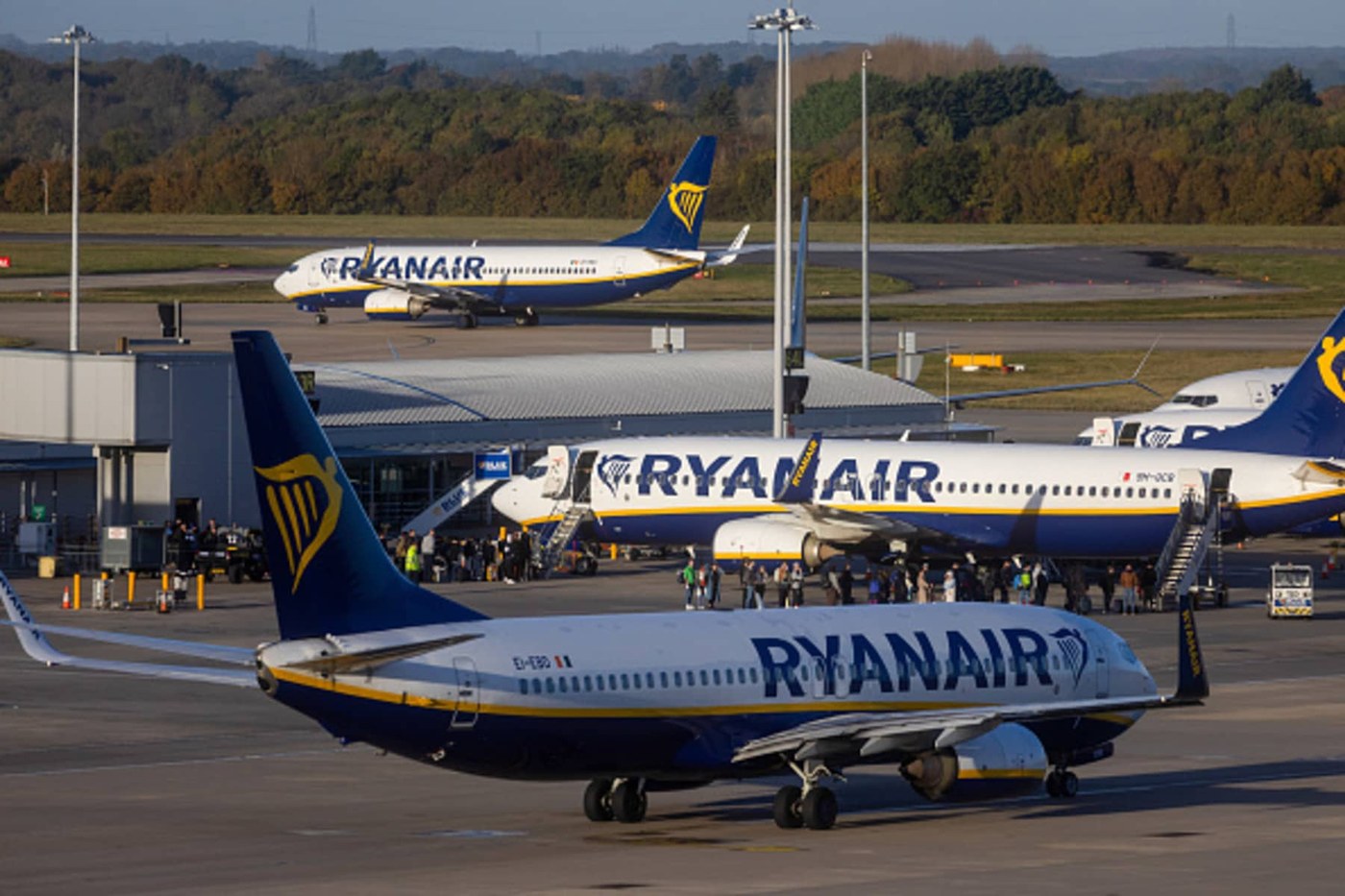
Ryanair CEO Michael O'Leary told CNBC Monday that European airfares are set to rise "significantly," growing by as much as 20% next year as fuel hedges expire.
The budget air carrier's profit fell 15% to 2.15 billion euros ($2.3 billion) in the first fiscal half of the year, as the price of its 20% unhedged jet fuel doubled.
"So we're facing 2027 where we have much higher oil prices... I think they're going to get passed on in significantly higher airfares," O'Leary told CNBC's Steve Sedgwick on Monday.
"The market customers have been insulated for the last 12 months... but those hedges are rolling off. There's still no resolution in the Middle East. Jet oil today is $170 a barrel. I mean, this is a very significant cost cliff we're all facing next year. I believe you're going to see airfares rise next year across Europe by 10%, maybe even 20%," O'Leary added.
Ryanair said it doesn't expect an increase in short-haul airfares to fully offset an estimated 2-billion-euro increase in fuel charges next year. It is therefore launching a cost review, which will include lowering crew rations, a potential temporary pay freeze and the use of AI to drive further efficiencies.
Ryanair's Irish-listed shares were last trading 3.7% higher. The stock has fallen around 19% this year.
The airline said in September it would cut its full-year traffic target from 216 million passengers to 214 million passengers in a bid to reduce its exposure to unhedged fuel during the winter. It's now expecting winter traffic between November and March to remain broadly flat year-on-year.
"I think you're seeing even this winter, all of the airlines across Europe, even Ryanair, for the first time in many years, we cut our winter capacity," O'Leary said. We'll only be flat this winter over the prior year, because it makes no sense for us to be growing capacity if we're buying unhedged oil at $170 a barrel."
Ryanair hedged 80% of its jet fuel at $67 per barrel for the year, which it said gave it an advantage over its competitors as its earnings remained insulated from volatile oil prices. The carrier added that it has hedged at least 25% of its 2028 jet fuel prices at $95 per barrel.
Earnings remain 'hostage' to oil prices
The share price reaction on Monday says more about investors' expectations than the numbers alone, according to Adam Vetesse, market analyst at eToro.
"Investors appear to have already priced in the hit from unhedged fuel and softer summer fares, leaving room for relief that the quarter landed exactly where consensus had predicted," Vetesse said.
"Near-term earnings remain hostage to oil prices and close-in bookings, but the market's early bounce suggests investors are willing to give Ryanair the benefit of the doubt that its cost advantage will matter more than the fuel spike once the dust settles," he added.
Ryanair also noted in Monday's announcement that it held 2.6 billion euros in cash as of 30 September, even after repaying 1.3 billion euros in debt.
"You know we've paid off all of our debt this year, so we have effectively zero debt. We have 650 aircraft on the balance sheet. We're significantly cash positive," O'Leary told CNBC, adding that the challenge facing all airlines is the volatility in oil prices, lack of hedging, and higher financing costs.