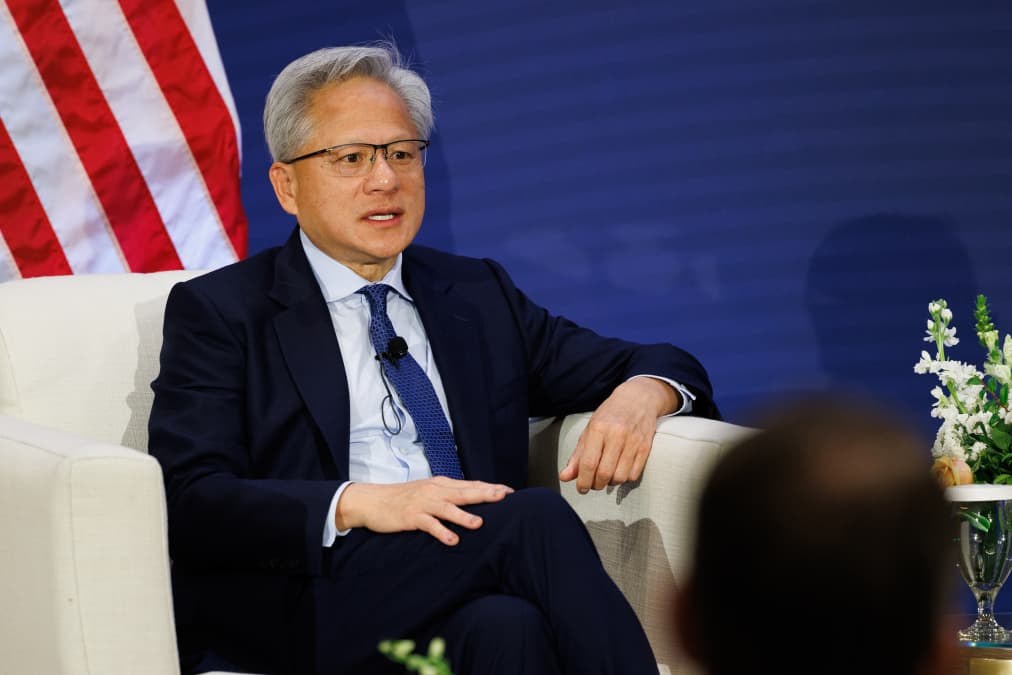
Reuters Breakingviews argued on November 9, 2026 that the Nvidia crisis may hurt China more than it helps. The column describes Nvidia as a $4.5 trillion chipmaker and says the affair between chief executive Jensen Huang and an alleged Chinese spy has put a spotlight on governance at the company.
That conclusion sounds backwards at first. A scandal that distracts the world’s most valuable AI chip supplier should, on its face, help Beijing’s own chip ambitions. Breakingviews does name Huawei as a rival that may benefit from the distraction. But the same column warns that tighter U.S. export controls could create greater losses for Beijing than any gain from a wounded competitor. Our earlier report on the independent committee reviewing Huang covers the corporate side of the story. This piece covers the geopolitical arithmetic.
A word on sourcing before the analysis. Breakingviews is commentary, not a news investigation. The column gives a framework and a set of named stakeholders. It does not give shipment counts, product models, prices or a dollar figure for losses, and the sourcing available to us does not confirm who the alleged spy is. We label everything below as either attributed to Reuters Breakingviews, drawn from public history, or our own analysis.
Add Shattered once in the Google app and our stories show up in your news suggestions.
What Breakingviews Argues About the Nvidia Crisis
The column’s thesis fits in one line. A governance scare at Nvidia gives China’s champions a short opening, but it also hands Washington a reason to tighten the screws, and the second effect is larger. Breakingviews frames Beijing as the party with more to lose if the U.S. responds with stricter export rules on advanced chips.
Four named parties sit inside that argument. Nvidia is the company under the spotlight. Huawei is the rival that may gain from the distraction. Anthropic and Alibaba are the customers the column says could face fallout. Beijing is the government that could absorb the heaviest losses. Each of those groups reacts to the crisis in a different way, and the rest of this article takes them one at a time.
The framing matters because most coverage of the Huang story has focused on the personal and legal angles. Breakingviews shifts the question to incentives. Who actually profits when the supplier of the most sought-after AI accelerators spends weeks defending its leadership? And who pays when lawmakers decide that the supply chain needs a harder edge? That is a market-structure question, and it deserves a market-structure answer.
What Is Confirmed and What Stays Unconfirmed
Readers searching for the Nvidia crisis in China terms deserve a clean separation of fact from inference. The table below sorts the claims. Every “confirmed” row means only that Reuters Breakingviews reported or argued it on November 9, 2026. It does not mean a court, regulator or Nvidia has ruled on it.
Two gaps stand out. First, “alleged” is doing real work in the column’s phrasing, so nobody should treat the spy label as an established finding. Second, the absence of numbers means any claim that this crisis cost Nvidia a specific sum is speculation. We will not supply a figure the sources do not.
Why Governance at a $4.5 Trillion Chipmaker Matters
Governance rarely moves a stock on its own. At Nvidia’s scale it matters for a different reason. The company sits at the center of a supply chain that Washington treats as a national security asset. When the person who runs that company becomes the subject of an alleged foreign-intelligence angle, the question shifts from “is this a good business” to “is this a controllable one.”
Breakingviews says the affair put a spotlight on governance. That wording points at process rather than personality. Who reviews a chief executive’s exposure to foreign contacts? How does a board test whether sensitive export decisions stayed clean? What gets disclosed to customers who build products around Nvidia hardware? Those questions apply to any strategic supplier, but they bite harder at a firm valued at $4.5 trillion.
The story has also drawn denials. Our earlier piece on the spy claim and the three denials issued lays out who said what. We rely on that reporting and on Breakingviews for the narrow facts here, and we make no claim about anyone’s guilt or innocence. Nobody in our sourcing has been convicted of anything.
For investors the practical read is simple. Governance risk is a discount-rate problem. It does not shrink demand for GPUs overnight, but it raises the odds that regulators, lawmakers and large customers ask for extra assurances. Those assurances cost time, and time is the one resource a chipmaker racing Huawei cannot spare.
How the Nvidia Crisis May Hurt China
The central claim deserves a careful walk-through. Breakingviews says tighter U.S. export controls could create greater losses for Beijing. The logic runs through three channels, and we should be clear that the channels are our reading of the argument, not quotes from the column.
The first channel is political. An alleged Chinese intelligence angle at the head of a leading U.S. chipmaker hands hawks in Washington a vivid story. Lawmakers who already favored stricter rules can now point to a concrete case rather than an abstract risk. Beijing, which depends on access to advanced compute for its AI labs and cloud providers, would absorb the tightening.
The second channel is commercial. Chinese cloud and AI companies still want the best accelerators they can legally buy. If the crisis chills the legal routes, those buyers face a gap that domestic suppliers cannot yet fully close. The third channel is reputational. Any firm that looks like a conduit for restricted chips becomes a target for scrutiny, which raises the cost of every gray-market workaround.
Put together, the commentary treats the scandal as a trap. China might enjoy a few quarters of a distracted rival. It might then pay for years under a harder control regime. That asymmetry is the heart of the Nvidia crisis China argument, and it explains why the headline says “hurt China more than it helps” rather than the reverse.
Huawei and the Distraction Dividend
Breakingviews singles out Huawei as the rival that may benefit from the distraction. The mechanism is easy to see. If Nvidia executives spend weeks answering board questions, congressional requests and customer calls, they spend fewer hours on product, supply and partner management. A competitor with a steady hand and a captive domestic market can use that window.
Yet the dividend has a ceiling. Distraction is temporary, and Huawei’s constraints are structural. The column’s own logic implies that the more the crisis pushes Washington to tighten controls, the more Huawei must lean on domestic manufacturing and software ecosystems that remain behind Nvidia’s. A weaker rival does not equal a stronger product.
We cannot quantify Huawei’s potential gain. Neither the fact sheet nor the research gives chip volumes, benchmark results or customer wins tied to this episode. Anyone quoting a Huawei market-share jump from this scandal is guessing. What we can say is that Breakingviews sees the upside as real but limited, and that the downside for Beijing sits in policy, not in technology.
Alibaba, Anthropic and the Customer Question
The column names Anthropic and Alibaba as companies with potential fallout. The pairing is revealing. One is a leading U.S. frontier lab. The other is a leading Chinese cloud and model provider. Both buy or rent enormous amounts of accelerator capacity, and both depend on Nvidia’s roadmap staying intact.
For Anthropic, the risk is about supply certainty and perception. If lawmakers lean harder on Nvidia, the lab’s compute partners could face new reporting duties or delays. Our coverage shows how large Anthropic’s infrastructure appetite has become, including a report that it pays $3.4 billion for 1.7 GW of gas power. A lab that builds on that scale cannot shrug off turbulence at its main chip vendor.
For Alibaba, the exposure is different and sharper. Chinese buyers already sit under U.S. restrictions, and any new tightening lands on them first. Our earlier report on a firm tied to cleared H200 chips that was 17 months old with an empty office shows how thin some intermediary structures can look under scrutiny. If Washington decides intermediaries are the weak link, Chinese cloud buyers lose flexibility.
The customer question therefore splits in two. U.S. labs worry about delays and disclosure. Chinese firms worry about access. Breakingviews reads the second worry as the larger one, which is why the column puts Beijing, not Nvidia, at the end of its sentence about losses.
Export Controls: The History Behind the Argument
The commentary lands inside a long policy arc. U.S. export controls introduced since 2022 have sought to limit China’s access to advanced Nvidia chips and to semiconductor-manufacturing equipment. The rules have shifted several times since. Each shift has produced a new round of workarounds, a new round of lobbying and a new round of arguments over whether the policy works.
2022 to 2025: Controls Tighten, Debate Grows
From 2022 onward the U.S. approach treated advanced AI compute as a strategic asset. Washington restricted top-tier accelerators and the tools used to make leading chips. Nvidia responded by adapting products and lobbying for clarity. Chinese firms responded by stockpiling, renting offshore capacity and funding domestic alternatives. The result was a cat-and-mouse game that never fully settled.
May 2025: Huang Calls the Controls a Failure
The policy debate reached a high point in May 2025, when Huang criticized the approach publicly. We cover his remarks in the next section. They matter here because they show that Nvidia’s own leadership argued the controls backfired. That position makes the current crisis awkward. A company that told Washington the restrictions were counterproductive now faces a scandal that could justify tougher ones.
Politics has moved too. Our report on the Nov. 4 election result and China’s AI window cites analysts who argue that a shift in Washington’s balance of power changes the odds on chip policy. Breakingviews adds a counterpoint. A window for China can close fast if a scandal gives the other side an argument.
What Huang Said About Export Controls in 2025
The following statements come from our verified quote file, and all of them date from May 2025, well before this scandal. They address export policy in general. They say nothing about the affair or the governance questions in the Breakingviews column, and we cite them only as historical context.
Reuters reported in May 2025 that Huang said, “All in all, the export control was a failure.” The same Reuters report conveyed his view that the rules had cost American companies billions, cut Nvidia’s share of the China market and pushed Chinese customers toward domestic suppliers.
Business Insider quoted Huang saying, “The export control gave them the spirit, the energy, and the government support to accelerate their development.” His point was that restrictions strengthened Chinese companies rather than slowing them. CNBC reported his earnings-call line that “Export restrictions spurred China’s innovation.”
Reuters also recorded Huang describing the intellectual basis for earlier policy: “The fundamental assumptions that led to the AI diffusion rule in the beginning, in the first place, have been proven to be fundamentally flawed.” He added a competitive assessment of his own market: “Our competition in China is really intense.”
Read next to the Breakingviews column, these remarks create a tension worth naming. Huang’s 2025 argument was that tighter controls help Chinese rivals. Breakingviews’s 2026 argument is that tighter controls, triggered by this crisis, would hurt Beijing. Both can hold at once. Controls can spur domestic innovation over a decade and still impose steep near-term costs on buyers who need the best chips this year.
Washington’s Options After the Scandal
Breakingviews implies a policy menu without spelling it out. We can sketch the plausible items based on how U.S. officials have behaved since 2022. None of the items below is announced, and we present them as scenarios, not reporting.
The mildest option is oversight. Congress could demand briefings, documents and assurances from Nvidia and its partners. Our earlier report on a request that Huang brief Congress behind closed doors on Nov. 18 shows that path already in motion. Oversight costs Nvidia time and attention but changes no export rules.
The middle option is tighter licensing and end-user checks. Regulators could demand more proof about who finally receives advanced chips and who operates the data centers that host them. That would hit intermediaries hardest. The harshest option is a broader cut-off of advanced accelerators and chipmaking tools. That is the outcome Breakingviews suggests would leave Beijing worse off.
Which path wins depends on facts that remain unknown. If investigators find that the alleged spy had no real influence over Nvidia’s decisions, the pressure may fade into hearings and headlines. If investigators find a pattern of chips reaching restricted users, momentum for the harshest option grows. Today the public record supports neither conclusion.
Market Impact and the Investor Read-Through
Breakingviews gives Nvidia’s value as $4.5 trillion and offers no price target, no share-price move and no estimate of lost revenue. Any number we added would be invented. The more useful exercise is to list how the crisis could reach earnings and then to watch which of those channels actually opens.
Channel one is demand. If export rules tighten, China-bound sales shrink, though Huang himself said in 2025 that his China share had already fallen. Channel two is cost. Compliance work, outside investigations and legal fees rise whenever a company faces scrutiny from both a board and lawmakers. Channel three is multiple. Investors price a premium for clean governance, and a doubt can compress that premium even if revenue holds.
The wider tape already looks nervous. Our earlier coverage of the $2.5 trillion AI sell-off and its four triggers shows that markets were looking for reasons to reprice AI exposure before this scandal broke. A governance headline at the sector’s bellwether adds one more reason, and Breakingviews adds the observation that the chain reaction does not stop at Nvidia.
For China-exposed investors, the column offers a sharper warning. Chinese AI and cloud names do not gain simply because Nvidia stumbles. If tighter controls follow, they could lose more than they win. That makes the trade less a bet on Nvidia’s weakness and more a bet on how Washington reacts.
Competitive Comparison: Who Gains, Who Loses
The table below maps the named stakeholders against the upside and downside Breakingviews implies. The “our read” column is analysis. It reflects how we weigh the column’s argument, and it carries no data from the sources beyond the parties’ names and the broad claims in the fact sheet.
The pattern is plain. Every party has some upside and some downside, but Beijing’s downside is the one with a policy lever attached. Washington can pull it. China cannot. That imbalance is the reason Breakingviews concludes that the crisis hurts China more than it helps.
The AI Model Landscape That Depends on These Chips
Chip policy only matters because of what the chips build. Release trackers list a crowded field of recent models. They show Google’s Gemini 4 Argon, announced September 30 and rolled out generally on October 13, along with OpenAI’s GPT-6.1 Sol, released September 29. They also list improved Mistral Large 4 weights from October 29 and a limited-access OpenAI model called GPT-6 Cyber that targets vulnerability discovery inside researcher-defined scope.
One entry bears directly on the China question. Baidu’s ERNIE-5.5-Flash-Base is listed as a 280-billion-parameter sparse mixture-of-experts model with 14 billion active parameters per token. The design shows how Chinese labs chase efficiency, getting more capability from each unit of scarce compute. Sparse architectures like that are partly a response to hardware limits, and they illustrate why Beijing wants a supply of capable domestic silicon.
We cannot say which of these models run on which chips. The sourcing does not tell us, and we will not guess. The point is narrower. Frontier labs on both sides of the Pacific keep releasing models on a cadence of weeks, and every release raises the value of reliable accelerator supply. Our AI and machine learning coverage tracks those launches as they land.
For developers the practical lesson is about dependency risk. A team that builds on one vendor’s hardware or one lab’s API inherits that vendor’s political and governance risk. The Nvidia crisis China debate is a reminder to keep deployment plans portable across clouds and chips where the budget allows.
Five Predictions for the Coming Months
These are our forecasts, built on the Breakingviews framework and the public history above. None is confirmed, and each could be wrong. We list what would change our mind under each one.
- Oversight arrives before new export rules. Hearings, briefings and document requests move faster than rulemaking. We expect more of those before any formal change to licensing. A confirmed pattern of restricted chips reaching banned users would speed the timeline.
- Huawei gets headlines, not a market-share leap. Distraction gives it attention. Hardware and software gaps keep its real gains modest in the near term. A verified large order from a major Chinese cloud would change this view.
- Chinese buyers hedge harder. Alibaba and peers will likely keep exploring domestic chips and offshore capacity. Efficient model designs such as sparse mixture-of-experts will stay popular. A loosening of U.S. rules would slow that shift.
- Nvidia tightens its own compliance. Expect more disclosure and screening around partners and executives, since governance was the stated spotlight. If Nvidia publishes details, we will update this view.
- Intermediaries take the first hit. Firms that sit between Nvidia and restricted buyers face the most scrutiny, as our H200 firm report suggested. Clear evidence that intermediaries are clean would reduce that risk.
The common thread is that policy, not product, drives the next chapter. Nobody should expect the technology gap to close or widen because of a scandal alone. What changes is the rulebook around who may buy what.
What to Watch Next
Several signals will tell us whether Breakingviews has read the situation correctly. The first is any formal statement from Nvidia’s board or its independent committee on scope and findings. The second is the outcome of congressional briefings. The third is any change in U.S. licensing posture. The fourth is movement from Chinese cloud providers on domestic chip purchases.
Each signal can be checked against primary documents, so readers should wait for those rather than act on commentary. A column can frame the stakes well and still be early or wrong on timing. We will update this analysis if any of the signals above produces new, confirmed facts. Until then, the Breakingviews thesis stands as a credible argument and nothing more.
The takeaway: the Nvidia crisis is a governance story at a $4.5 trillion company, but its sharpest consequences may land in Beijing. Distraction helps Huawei a little. Tighter export controls could cost China a lot. And the facts that would settle the argument, from the spy’s identity to any dollar loss, remain outside the public record.
Frequently Asked Questions
What did Reuters Breakingviews say about the Nvidia crisis?
In a November 9, 2026 column, Reuters Breakingviews argued that the Nvidia crisis may hurt China more than it helps. It said Jensen Huang’s affair with an alleged Chinese spy put a spotlight on governance at the $4.5 trillion chipmaker and that tighter U.S. export controls could create greater losses for Beijing.
Who is the alleged Chinese spy?
The sourcing for this article does not confirm the identity of the alleged spy, so we do not name anyone. The word “alleged” applies, and no court has convicted anyone in connection with the matter in the sources we reviewed.
Why might the Nvidia crisis help Huawei?
Breakingviews names Huawei as a rival that may benefit from the distraction. If Nvidia’s leaders spend time on investigations and briefings, a competitor can push harder in the Chinese market. The column also implies that benefit is limited, because tighter export controls would constrain Chinese chip supply chains.
How could Anthropic and Alibaba be affected?
Breakingviews says the controversy could create fallout for both. Anthropic, a U.S. lab, faces supply and compliance risk if scrutiny of Nvidia grows. Alibaba, a Chinese cloud and AI company, faces access risk if Washington tightens export rules. The column does not quantify either effect.
What have U.S. export controls done since 2022?
Controls introduced since 2022 have sought to limit China’s access to advanced Nvidia chips and to semiconductor-manufacturing equipment. Huang argued in May 2025 that the policy backfired by strengthening Chinese competitors and cutting Nvidia’s China share.
Has Nvidia lost money because of the crisis?
No confirmed figure exists in our sourcing. Breakingviews gives Nvidia’s value as $4.5 trillion but offers no estimate of lost revenue, shipments or share-price damage. Treat any specific loss number you see as unverified until a primary source backs it.
Will the U.S. tighten chip export rules because of this?
Nothing has been announced in our sources. Breakingviews raises tighter controls as a possible response and argues Beijing would lose more if they arrive. Watch for congressional briefings, U.S. licensing changes and any findings from Nvidia’s own review.
Is Jensen Huang still leading Nvidia?
Breakingviews identifies Huang as Nvidia’s leader in its November 9, 2026 column. Our sourcing does not include any announcement of a change in his role, and we make no claim beyond that.