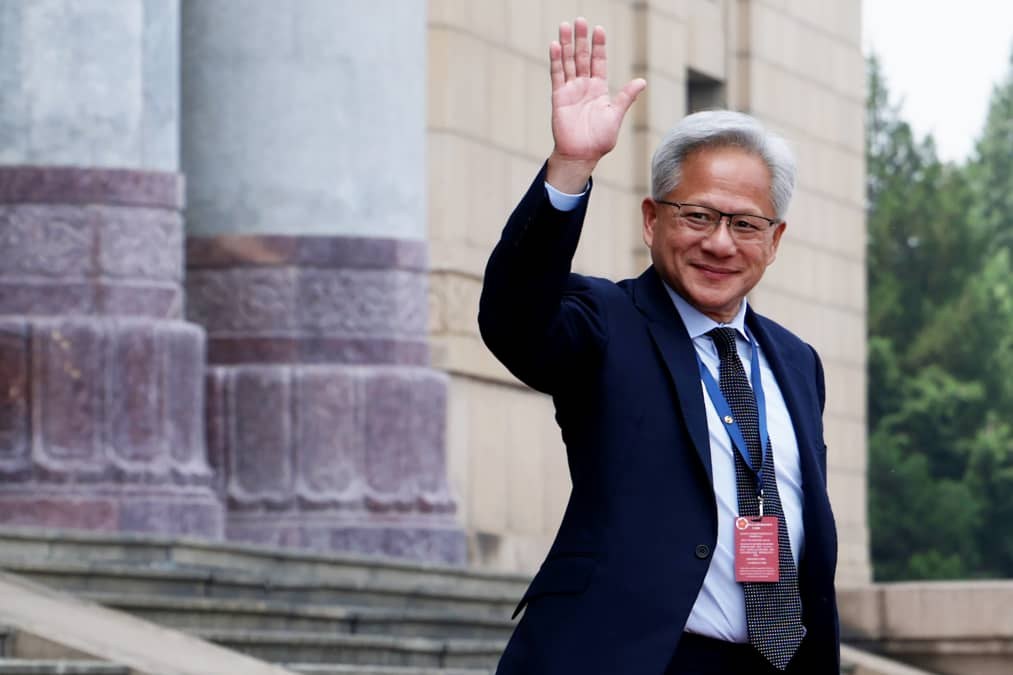
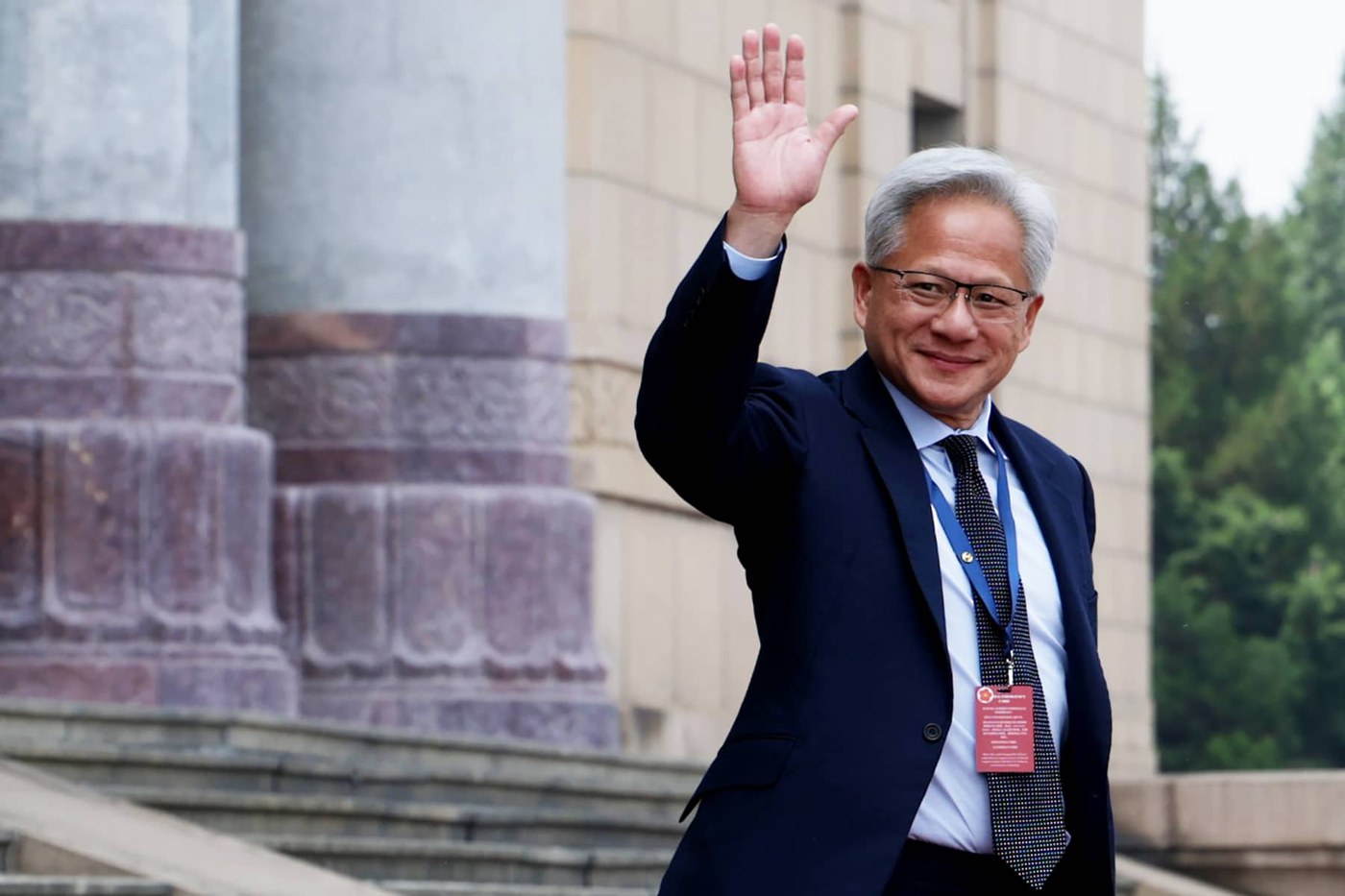
Following Nvidia CEO Jensen Huang's admission on Sunday to an extramarital affair with alleged Chinese spy Alice Huang, the chipmaker's relationship to China is about to come under intense scrutiny in Washington, D.C.
Since October 2022, when the Biden administration announced sweeping controls to limit China's ability to obtain advanced U.S. chips, Nvidia has seen its business diminish in the world's second-largest economy. Months after an even stricter set of rules was implemented by the Trump administration, Huang said in October 2025, "We are 100% out of China."
The recent allegations against Huang, while throwing the chipmaker into crisis, have also brought attention to the Nvidia CEO's potential influence over U.S. policy on chip sales to China, where its business once flourished. Of particular interest is whether restricted Nvidia chips have reached Chinese companies through customers like Singapore-based Megaspeed, the company linked to Alice Huang.
The New York Times first reported that the Chinese businesswoman was a spy for China's Ministry of State Security, according to people briefed on the intelligence circulated in a memo among the Trump administration in the spring. China has called the allegation a smear.
Jensen Huang has been closely aligned with President Donald Trump during his second administration, helping advise the White House on artificial intelligence safety regulations, while also pushing for looser restrictions on selling AI chips to China. In December, Trump said Nvidia would be allowed to ship its H200 chips to China, provided the U.S. got a 25% cut of sales. In March, Huang told reporters that Nvidia had "received purchase orders, and we're in the process of restarting our manufacturing."
Huang was a last-minute addition to the roster of tech executives who joined Trump on a trip to China in May, after the president was briefed on intelligence concerns, according to the Times.
"In 35 years, I haven't seen a chip CEO with this much direct influence on export policy," said Patrick Moorhead, CEO at Moor Insights & Strategy, in an email.
Since last week's midterm elections that included sweeping victories across the country for Democrats, the mood in Washington has changed. Three House committees have requested closed-door briefings with the Nvidia CEO about his relationship with Megaspeed.
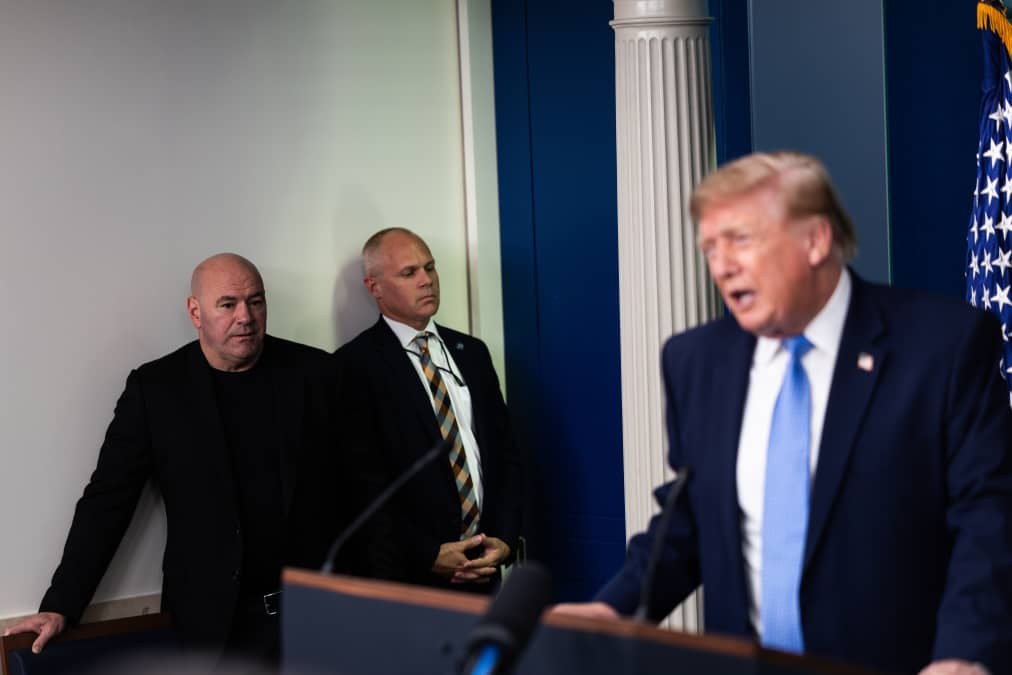
Democratic lawmakers, who are about to take power in the House and Senate, have said publicly that Congress will investigate and seek answers. Trump said Monday that he was "amazed" by the allegations and that Huang told him he "had no idea that she was a spy." The FBI is now looking into the issue, Trump said at a White House briefing.
'Turbulent month or so'
It's been a long four years for Nvidia in China.
Before the initial export controls in 2022, China made up nearly a quarter of Nvidia's revenue. Nvidia responded to the Biden-era restrictions by redesigning some of its products to comply with the new regulations.
"It was a turbulent month or so as the company went upside down to re-engineer" the products, Huang told CNBC in a 2023 interview. Still, he was confident the company could continue selling chips to China. "I think we're going to be just fine in the ability to serve the customers there," he said.
After the Biden administration tightened export restrictions again, Nvidia redesigned another AI graphics processing unit for China, the H20. Following reports that Chinese model developer DeepSeek was using restricted Nvidia chips, the Trump administration limited sales of H20. Nvidia revealed it would incur $5.5 billion in costs related to canceled orders for the redesigned chip.
However, despite saying in its forecasts that "we're assuming 0% for China," the company maintained business in the region. In the last fiscal year, Nvidia reported that about 9% of its revenue came from China, including Hong Kong, although that includes revenue from segments outside of restricted data center chips, such as gaming, auto and industrial. Nvidia's China revenue was 8% in the most recent quarter.
A report in May from short seller Culper Research alleged Nvidia's China exposure was much higher. The firm said that more than 20% of Nvidia's fiscal 2026 compute revenue was driven by China, supported by "illegal GPU diversion and Southeast Asian intermediaries," according to the report.
A loophole allows Chinese companies to rent Nvidia GPUs in data centers, even when they're restricted from buying them outright. For example, a Chinese company could lease Nvidia computing power in Europe by renting server capacity from a non-Chinese neocloud or data center operator that's exempt from export controls.
Nvidia didn't respond to a request for comment for this story.
Megaspeed, an Nvidia customer based in Singapore, has been accused of diverting its own supply of Nvidia's restricted AI chips to Chinese companies. Megaspeed denies wrongdoing and said inspections found no evidence of violations.
In 2025, Nvidia changed the way it reported regional sales to categorize by customer headquarters, instead of by where the products were billed. Nvidia also stopped reporting Singapore sales during the same period.
"Whether Blackwell chips reached China is a Megaspeed question that predates this week," said Moorhead, pointing to Bloomberg reporting in December 2025 that found Megaspeed had imported 50,000 more Nvidia chips than Nvidia tallied in its data centers.
In 2025, a House Select Committee opened an investigation into whether China's DeepSeek operates on Nvidia's chips.
A separate investigation by the U.S. Commerce Department was centered on Megaspeed. That probe was abruptly transferred to the Justice Department, the Times reported, following an email from Nvidia's general counsel to the Commerce Department seeking information about the investigation.
The restrictions aren't just coming from the U.S. China has continued to limit the amount of Nvidia chips it will allow into the country, keeping Nvidia's China sales numbers down. The U.S. has licensed H200 sales to Alibaba, Tencent, ByteDance and other Chinese companies, but Beijing hasn't approved large-scale imports, Moorhead told CNBC. Nvidia said H200 shipments to China made up less than 1% of data center revenue for the quarter that ended in July.
Moorhead expects more export control legislation to pass as a result of the latest turmoil. Proposals could allow Congress oversight of chip export licenses or require chipmakers to install security mechanisms to track the location of chips to determine if they've found their way to China.
"Every China license now gets read through this story," Moorhead said. "Jensen has been Nvidia's lead voice on China, and that voice is weaker."
— CNBC's Kif Leswing and Seema Mody contributed reporting to this report.
WATCH: Nvidia CEO Jensen Huang On How His Big Bet On A.I. Is Finally Paying Off