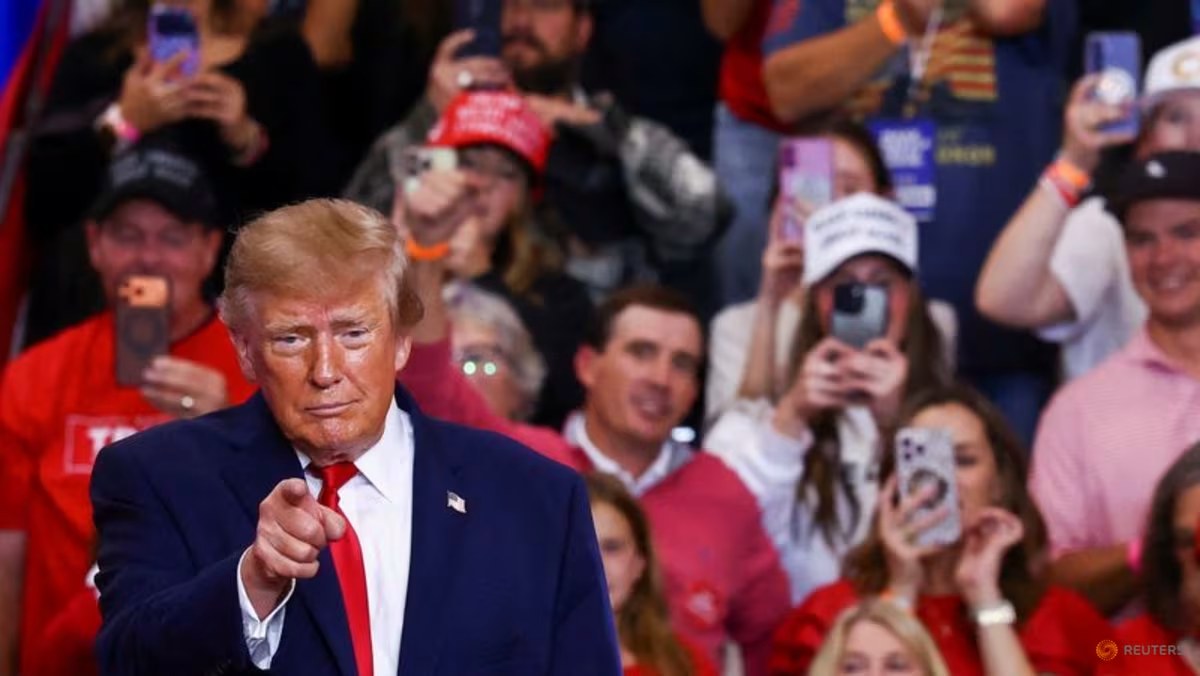
Democrats flipped seven Senate seats, including three in states long held by Republicans, and overcame a redistricting effort to capture the House. President Trump told The New York Times that he would accept the results.
Latest
Democrats on Wednesday were celebrating a seismic triumph in the midterm elections, winning control of the Senate and the House as voters delivered a blistering rebuke to President Trump and reset the balance of power in Washington. The romp stretched from coast to coast as Democrats flipped seats that had spent decades in Republican hands and took House districts that had long seemed inaccessible.
Mr. Trump, who had made the midterms a referendum on himself, imploring voters to act as if he were on the ballot, told The New York Times in an interview that he was “absolutely willing to accept those results” and was prepared to work with Democrats.
Among the questions remaining as Wednesday dawned were how big the Democrats’ House majority would be, and whether the party could yet widen its lead in the Senate. Ballots were still being counted in Alaska’s contentious Senate race and in the unlikely battleground of Mississippi, where less than 50 votes separated the two candidates.
But a blue wave had already become a red wipeout: Democrats flipped Senate seats in Maine, Iowa, Kansas, Ohio, North Carolina, South Carolina and even Texas, according to The Associated Press. Republicans had held the Senate seats in Texas and South Carolina for decades. The Kansas seat had been red for nearly a century.
Senator Susan Collins, a long-serving Maine Republican who had repeatedly foiled Democratic efforts to unseat her, conceded her race to the Democrat Troy Jackson.
In Texas, James Talarico, a state legislator who became a national fund-raising sensation, toppled Ken Paxton, the scandal-ridden Republican state attorney general whom Mr. Trump had elevated to the nomination.
In South Carolina, Dr. Annie Andrews prevailed over Senator Darline Graham, the sister of the late Senator Lindsey Graham. And Dr. Abdul El-Sayed won in Michigan, becoming the first Muslim elected to the Senate, even after his defeated primary rival endorsed the Republican nominee.
The scale of the Democratic victory was beginning to come into focus: The party’s margin in the overall national vote for House seats was expected to be about 13 percentage points, the largest for either party in a congressional election in at least a half-century, according to estimates by The New York Times. Democrats made extraordinary gains with young voters and Hispanic voters, and significant inroads with voters who didn’t attend college, according to Times Voter Trends.
The wins also thwarted the redistricting effort Republicans had undertaken in hopes of protecting their House majority. Democrats won districts in Florida that Republicans redrew, and flipped a North Carolina seat that was also part of the G.O.P. redistricting effort.
Democratic landslide: The results represented an unambiguous mandate from voters for a check on Mr. Trump, who has pushed the limits of his power, and imperiled whatever was left of his legislative agenda. He and his administration will face investigations that are expected to consume much of the next Congress. Read our key takeaways ›
A complicated landscape: More than 400 Times reporters, editors, data analysts, video journalists and photographers are covering the midterms, seeking to understand a large country with voters who are complicated — and sometimes contradictory. Read more ›
Statehouses: Democrats notched other firsts in governors’ races. In Georgia, Keisha Lance Bottoms became the first Black woman to be elected governor in U.S. history. In Texas, Gina Hinojosa will be the first Democratic governor since 1990, ousting Gov. Greg Abbott, a three-term Republican. And Dr. Amy Acton became the first woman elected governor of Ohio.
G.O.P. bright spots: Republicans fended off a significant challenge in a Senate race in Florida, with Senator Ashley Moody defeating Angie Nixon, a progressive Democrat. Byron Donalds, a staunch Trump supporter, was elected Florida’s first Black governor, keeping the Republicans’ hold on that office.
Ballot measures: Voters across the country also weighed in on a range of statewide issues, including how future elections would be run and how their own votes would be counted. Read more ›
With Democrats having taken control of Congress, countries around the world are wondering what comes next for their relationships with the United States. Some students in Tokyo and Sydney expressed hope that the results would check President Trump’s power after two years of disruptive tariffs and a war with Iran, both of which have driven up inflation worldwide. Others questioned whether the results would spur Trump toward more aggressive actions abroad.
It could still be a long wait for a call in the Alaska Senate race, where about a quarter of the vote remains uncounted. Senator Dan S. Sullivan, the Republican incumbent, is slightly ahead of Mary Peltola in the reported vote, but that lead appears to be somewhat fragile.
Most of the Election Day vote has been reported, and although these ballots favored Mr. Sullivan, he is underperforming President Trump’s 2024 margins among Election Day voters. In the 27 districts that had finished tallying Election Day votes as of Wednesday at 5 a.m. Eastern, Mr. Sullivan was running behind Mr. Trump by an average of 12 percentage points.
The bulk of the remaining vote is expected to come from mail-in ballots, some of which were cast close to Election Day, and others of which were postmarked by Election Day and will be received in the days after. These are expected to lean toward Ms. Peltola. The deadline to count these votes, as well as provisional ballots, is Nov. 18.
It is an open question whether either candidate will cross the 50 percent threshold needed to win outright. If not, the race will go to ranked-choice tabulation, which will not begin until Nov. 18.
While The New York Times’s election forecast was leaning slightly toward Peltola when it was shut down in the early hours of Wednesday, there are various sources of uncertainty that could counterbalance her expected advantage in the late mail vote. Issues include how many ballots came from voters who did not rank additional candidates beyond their first choice, as well as the potentially confounding presence of Gerald L. Heikes and Daniel J. Sullivan, Jr.
- By Nate Cohn, Laura Bult, Nour Idriss, June Kim and Edward Vega
- By Shane Goldmacher, Alexandra Ostasiewicz, Thomas Vollkommer and James Surdam
- By Christine Zhang, Sutton Raphael, Brian Oh, Edward Vega and Stephanie Swart
- By Shane Goldmacher, Alexandra Ostasiewicz, Jon Miller, Edward Vega and James Surdam
- By Christine Zhang, Sutton Raphael, Brian Oh, Stephanie Swart and Edward Vega
- By Evan Reynolds, Laura Bult, Nour Idriss, June Kim and Edward Vega
- By Shane Goldmacher, Alexandra Ostasiewicz, Thomas Vollkommer, James Surdam and Edward Vega
- By Christine Zhang, Sutton Raphael, Brian Oh and Stephanie Swart
- By Evan Reynolds, Laura Bult, Nour Idriss, June Kim and Edward Vega
Nevada’s attorney general, Aaron Ford, reclaimed the governor’s office in Nevada for Democrats, according to The Associated Press, giving his party new momentum in a swing state that had voted for President Trump in 2024.
Mr. Ford defeated the incumbent governor, Joe Lombardo, a Republican, in one of the nation’s tightest races.
Mr. Ford, who will be Nevada’s first Black governor, jumped into the race in mid-2025. He spent the entire campaign emphasizing rising costs and tying the sitting governor to the president’s least popular policies, blasting the “Lombardo-Trump economy” at every turn.
His dual focus on affordability and Mr. Trump will likely be seen as a playbook for Democrats looking to win purple states, and Mr. Ford’s allies hope that his success this year will set up the party for a pivotal presidential contest.
Mr. Lombardo, a relatively moderate former sheriff, had for months been favored to prevail. But as Mr. Trump’s waning popularity dragged down Republicans across the country in polling, analysts declared the Nevada race a tossup.
To hang on, Mr. Lombardo had aimed for a delicate balance, praising some of Mr. Trump’s policies without fully embracing the MAGA right. He attacked Mr. Ford as too liberal, comparing his policy goals to socialism, and accused him of politicizing his lawsuits on behalf of the state.
And Mr. Lombardo had tried to convince voters that his administration had made inroads in diversifying the state’s economy, curbing unemployment and securing new funding for schools.
But most Nevada voters were deeply unhappy with the status quo. They said they were struggling with housing prices and expensive gas, while unwanted data centers proliferated. In Las Vegas, a slowdown in tourism had generated a wave of negative headlines, and the powerful Culinary Union christened the period the “Trump slump.”
Mr. Ford leaned into his working-class upbringing, describing a childhood pocked with hunger and his role as a young single father reliant on social services to get by.
“This isn’t just a theme for me, y’all, it’s my life,” Mr. Ford told a crowded church in Las Vegas a few weeks before the election as he discussed his focus on affordability.
Mr. Ford, who is fluent in Spanish, also prioritized reaching out to Latino voters, who make up about 20 percent of Nevada’s electorate and helped Mr. Trump win the state in 2024.
During the campaign, Mr. Ford has pledged to repeal Nevada’s longstanding “right to work” law, which weakens organized labor by allowing workers to opt out of unions at unionized workplaces. He also railed against corporate homeownership and vowed to cancel millions of dollars in medical debt for the state’s lowest-income residents.
The first Muslim elected to the Senate in United States history stood on the stage early Wednesday in front of a Michigan flag and an American flag and introduced himself.
“My name,” he said, using the full, proper, guttural pronunciation, “is Abdulrahman Mohamed El-Sayed.”
Hot, sweaty and packed shoulder-to-shoulder into the main space at Democrats’ ticket-wide election night party in downtown Detroit, the crowd let loose a roar of applause.
“Thank you,” he said. “You took a chance on the unlikeliest of candidates.”
Dr. El-Sayed, a Michigan-born Rhodes scholar and former public health official in Detroit and Wayne County, was not just an anti-establishment economic populist winning on what proved to be a beyond-their-wildest-dreams night for Democrats. He was all of that and the son of Egyptian immigrants.
And he didn’t merely beat former Representative Mike Rogers. He won after prevailing in a contentious primary election against Representative Haley Stevens — and then shrugging off her 11th-hour endorsement of Mr. Rogers. He won, too, after a general election that was among the ugliest, most racist, most Islamophobic campaigns in the history of American politics, with President Trump again and again calling him “a jihadist” and Mr. Rogers and his supporters all but painting him as a terrorist.
“As I was campaigning, some of you would come up and ask, ‘How come you don’t hit back? How come you don’t call them racist or hateful?’” Dr. El-Sayed told the partyers during his victory speech an hour before The Associated Press made its official call. “They weren’t targeting me. They weren’t just attacking me. They were targeting and attacking you. They were targeting and attacking the very idea of America.”
Hours earlier, before even the first polls closed, Rasha Basha, 56, stood near the stage. She wore an American flag bandanna tied around her neck. Atop her head scarf was a blue cowboy hat with white letters spelling out “ABDUL.”
“He’s like my son,” she said. “He grew up with my kids.”
“The last month — the bigotry, the hate — it actually reminded me a lot of the Sept. 11 attacks,” said Abe Basha, 37. “My name is Ibrahim, but I changed my name to Abe.”
Dr. El-Sayed’s election to the Senate “would be bigger than anything maybe we’ve ever experienced as Muslim Americans,” Mr. Basha said.
For months, polls had suggested it would happen. Still, the onslaught of insinuations and accusations, plus the recent soap opera of the decisions of Ms. Stevens, made the outcome feel uncertain.
On Tuesday night in a quiet, out-of-the-way corner, Mallory McMorrow, a state senator who ran against Ms. Stevens and Dr. El-Sayed in the primary, said in an interview that voters were “disgusted.”
“Mike Rogers’s message, if I could summarize it, was ‘Health care costs are too high, and that guy’s a Muslim,’” Ms. McMorrow said. “It’s going to backfire in a big way.”
Elsewhere as the evening progressed, Democratic Senate candidates kept winning. In North Carolina and Georgia and New Hampshire. In South Carolina and Texas and Kansas. In Iowa and Ohio and Minnesota and Maine.
In Michigan, which last elected a Republican to the Senate in 1994 but also was instrumental in sending Mr. Trump to the White House in 2016 and 2024, votes trickled in past midnight.
But at 1:29 a.m. Wednesday, to ecstatic chants and cheers, Dr. El-Sayed took the stage.
“All the kids who watched this last month, all the parents who struggled to explain why the president openly mocked someone for their name and how they pray, let them know tomorrow that the bad guys lost,” he said.
“Enjoy your retirement,” Dr. El-Sayed said. “You chose hate. And Michigan chose hope.”
“There is this delicious irony in the fact that you’re constitutionally obligated to swear me in,” he said.
And President Trump, who had called him “Abdul Ramadan” and used his middle name as an epithet.
“I know you struggled with my name,” he said. “You can just go on and call me senator.”
SKIP ADVERTISEMENTGov. Tina Kotek, one of the few endangered Democratic incumbents in a difficult year for Republicans, prevailed in her re-election bid, The Associated Press said, as she was powered in the end by a pro-Democratic environment in her blue state.
Ms. Kotek, who had been the longest-serving House speaker in Oregon history before winning the governorship four years ago, defeated State Senator Christine Drazan, the same Republican she beat in her first run for governor.
Ms. Kotek ran in 2022 pledging to reduce homelessness, expand access to addiction and mental health services, supercharge housing production and improve public schools. Progress on all of those issues has been far slower than promised.
In 2024, she faced an ethics controversy over her efforts to give her wife an expanded role in state government, prompting the departure of three top aides and forcing the governor to abandon her plans and apologize. A state ethics commission later dismissed complaints against her.
Liberal Democrats in Oregon have been frustrated by Ms. Kotek’s efforts to woo business leaders and work with Republicans. The state’s largest teachers union, a traditional source of Democratic support and get-out-the-vote efforts, opted not to endorse in the race.
Recent polls have shown Ms. Kotek’s dissatisfaction ratings rivaling those of President Trump.
SKIP ADVERTISEMENTNebraska voters rejected two ballot measures that would have legalized online sports betting in the state. Gambling companies supporting the measures, including DraftKings and FanDuel, poured more than $20 million into the campaign, promising new tax revenue for property tax relief. Opponents, who raised just over $1 million, warned that online betting would threaten the integrity of college sports and fuel gambling addiction.
Arizona voters have approved a ballot measure barring transgender student athletes from participating on teams that match their gender identity, The Associated Press reported. The measure also requires transgender students to use only those restrooms and locker rooms that match their sex at birth.
Two traditionally stalwart Democratic groups returned to the party fold these midterms after a dalliance with the G.O.P. in 2024.
Counties with a Black majority had drifted a little more than a percentage point toward Trump two years ago. But when the dust settled this election night, those places moved nearly 16 percentage points toward Democratic Senate candidates. The Democrats ended up beating their Republican opponents by more than 50 percentage points in some counties.
Young voters also appear to have come back to the Democratic fold after some signs they were willing to vote Republican. After counties with large numbers of 18- to 34-year-olds swung more than seven percentage points to Mr. Trump in 2024, they swerved left by nearly 23 percentage points this year.
Democrats marched to a landslide victory in the midterm elections on Tuesday as voters across the country raged at President Trump’s party, dealing Republicans stunning defeats from the Deep South to the prairie lands.
For the first time this century, Democrats won statewide in Texas, taking not just a Senate seat but also the governor’s mansion. They won a Senate seat in Kansas, which had not happened in nearly 100 years. They flipped a Senate seat in South Carolina, a state that had barely been on the battleground map. And they seized House seats in such deep-red territory that Democrats are on a glide path to their biggest congressional majority in years.
Economic anxieties at home and a war abroad proved to be a politically toxic combination for Mr. Trump and his party. Democrats were on track to win the national House popular vote by the largest margin in a half-century.
The results amounted to an unambiguous mandate from the public for a check on a president who has pushed the limits of his power, and they imperiled whatever was left of a legislative agenda for Mr. Trump. Now he and his administration will face investigations that are expected to consume much of the next Congress.
Here are eight takeaways from a brutal night for Republicans:
Democrats stormed to power in the Senate.
A pediatrician in South Carolina. A minister in Kansas. A seminarian in Texas. A Paralympic gold medalist in Iowa. A logger in Maine.
Democrats had flipped half a dozen Senate seats by the time the clock struck midnight, taking control of the chamber in a sweep that seemed unthinkable just a year ago.
Entering Tuesday, Democrats did not hold a single Senate seat in a state that Mr. Trump had won all three times he ran for president. By Wednesday, they had senators-elect in six of them — including five that the president won by double digits in 2024. Democrats will enter 2027 with at least 54 seats.
The rout meant that for the rest of Mr. Trump’s second term, none of his nominees — whether for the Supreme Court or top administration posts — will be confirmed without Democratic consent. And because senators serve for six years, the Democratic victories promise to remake the chamber’s complexion into the next presidency.
The Democrats who flipped seats included Dr. Annie Andrews in South Carolina, the Rev. Adam Hamilton in Kansas, James Talarico in Texas, Josh Turek in Iowa and Troy Jackson in Maine.
In North Carolina, Roy Cooper, a former governor, became the first Democrat to win a Senate race in the state since 2008. In Ohio, former Senator Sherrod Brown completed a comeback two years after being voted out.
The breadth of the Democratic victories suggested that the dire political climate for Republicans did more to power the opposition party’s successes than anything else.
Democrats are amassing a big House majority.
Democrats flipped House seats in rural North Carolina and central Kentucky, in the suburbs of St. Louis and Omaha, and all along the Texas border. They seized three seats in Iowa and four in Pennsylvania. They rebuffed redrawn lines in Florida.
Democrats made inroads deep into Republican territory, prevailing in a Kentucky district, for instance, that Mr. Trump carried by 15 percentage points in 2024. But they also ousted some of the sturdiest Republican survivors, like Representative Brian Fitzpatrick of Pennsylvania, who had been the lone House Republican to win election three times in a district that Mr. Trump lost three times.
Now Democrats are on track for a sizable House majority, with Representative Hakeem Jeffries of New York poised to become the first Black speaker in American history.
Mr. Jeffries rushed to the rooftop of the Democratic Party headquarters in Washington on Tuesday night to film a video declaring that Republicans were “shook.”
The final size of the Democratic majority was still to be decided. But as of early Wednesday, Republicans had yet to win any of the most competitive races.
War, prices and an unpopular president cost the G.O.P.
“Pretend I am on the ballot,” the president said. His problem was that voters listened.
Before he lost the election, Mr. Trump lost the public’s trust on the issue that got him elected in the first place: the economy. And as the war in Iran dragged on, he struggled to defend a conflict that caused gas prices to rise, his MAGA coalition to fracture and Democrats to unite.
The president aggressively campaigned in the final month, jumping from one red state to another in hopes of reviving the energy of his flagging base. But the results showed the extent of the rebuke for Republicans.
In 2018 in Mr. Trump’s first midterm election, Republicans lost the House as suburban women revolted against his leadership. This time, the rejection seemed to come from virtually every corner of his coalition, including white working-class voters in places like Iowa, Ohio and Pennsylvania.
Mr. Trump, unsurprisingly, was defiant, distancing himself from his own defeat.
He began Tuesday morning by calling into Fox News to downplay the war in Iran. “When you talk about war, this isn’t really war,” he said.
He ended election night back on the phone with his favorite network that he sometimes loves to hate, speaking with the Fox News anchor Bret Baier.
“It’s just a point in time, Bret. Just a point in time. It’s the way it is,” Mr. Trump mused. “There was a mood in the air, I guess.”
Democrats scored seismic victories in Texas.
Democrats had dreamed for a generation of winning in Texas, one of the nation’s largest states, but they repeatedly fell short.
On Tuesday, they stormed to victory in the marquee statewide races. Mr. Talarico toppled Ken Paxton in the Senate contest, and Gina Hinojosa, a huge underdog, ousted Gov. Greg Abbott, a three-term incumbent.
Either outcome would have been momentous on its own. Both at once? That was more than Democrats could have hoped for not long ago.
At 37, Mr. Talarico is now one of the Democratic Party’s biggest stars. He overcame Mr. Trump’s attempt to cast him as outside the mainstream — “Talafreako” was the president’s derisive nickname — as well as the more than $200 million that Elon Musk spent trying to keep the state red.
“We just took back Texas,” Mr. Talarico told supporters in Austin.
At least some Hispanic voters in South Texas, a region that had swung toward Mr. Trump in 2024, swung back. Democrats claimed all four districts in Texas that border Mexico, which have some of the densest Latino populations anywhere in America.
“The nation will look at Texas and say we want something far more important than an election,” Ms. Hinojosa said in her victory speech. “They will look at Texas and say that faith in government has been restored.”
Republicans’ redistricting gambit sputtered.
In the summer of 2025, the White House pushed Republican state legislators to redraw their congressional lines to bolster the party’s chances of holding a majority.
The effort started in Texas and spread to North Carolina, Ohio and Florida. A Supreme Court ruling that dealt a new blow to the Voting Rights Act expanded the efforts to Alabama, Tennessee and Louisiana.
But the surge of Democratic voters on Tuesday overwhelmed some of the bespoke new G.O.P. seats.
The first Democratic House flip of the night came in North Carolina, a state that Republicans had remapped. Jamie Ager, a Democratic farmer, won a western North Carolina district that Mr. Trump had carried by 10 points. And the chairman of the House Republican campaign arm, Representative Richard Hudson of North Carolina, was in danger of losing his seat.
In Florida, Representatives Kathy Castor and Jared Moskowitz survived despite a new map that put them into more Republican territory.
In an interview, Mr. Jeffries praised House Democrats who ran in new, tougher terrain.
“So many of our colleagues made the patriotic and courageous decision to stay and fight,” Mr. Jeffries said, adding, “They didn’t run away from the fire. They ran toward the fire and helped put it out.”
He ticked eight of them off by name. As of early Wednesday, none of those lawmakers had lost, and at least six had won.
Governor’s races made history.
Democrats reclaimed a majority of the nation’s governor’s offices for the first time in two decades. They won at least five competitive races, in Georgia, Iowa, Ohio, Texas and Wisconsin.
Voters also elected three new Black governors: a Republican, Byron Donalds, in Florida, and two Democrats, Keisha Lance Bottoms in Georgia and David Crowley in Wisconsin. Before Tuesday, only three Black governors had ever been elected in the country’s history.
Ms. Bottoms is the first female Black governor ever to be elected.
Ms. Hinojosa was the first Latina elected to lead Texas. Another Democrat, Xavier Becerra, was the first Latino elected governor of California. Deb Haaland, a Democrat, will be the nation’s first female Native American governor after winning in New Mexico.
There were other historic firsts, too.
Michigan elected the nation’s first Muslim senator, Dr. Abdul El-Sayed, a Democrat. New Hampshire elected a Democrat, Representative Chris Pappas, who will become the first openly gay man to serve in the Senate.
Peggy Flanagan, a Democrat from Minnesota, became the first Native American woman to win election to the Senate. A second Indigenous woman, the Democrat Mary Peltola, could join her if she is elected in Alaska.
Musk’s millions didn’t make a difference.
Mr. Musk, the world’s richest man, spent nearly half a billion dollars on the midterms. His party lost anyway.
Republicans, powered by Mr. Musk’s money and Mr. Trump’s $400 million super PAC, dominated Democrats in spending in this year’s Senate races. The Democrats still swept through the battlegrounds.
It was the second consecutive election in which the national party that spent more lost, after former Vice President Kamala Harris’s cash advantage was not enough in 2024.
Now Republicans face a daunting financial future. Democrats continue to dominate them at raising small-dollar donations online. And the lone Republican who has energized Republican small donors for the last decade is Mr. Trump. He will not be atop the ticket again.
Early in his term, Mr. Trump had suggested targeting some top Democratic donors for investigation, a move that seemed to put a chill on some contributors.
One of those whom the president had named, Reid Hoffman, the billionaire venture capitalist and LinkedIn co-founder, captured the Democratic Party’s emotions early on Tuesday evening with three emojis: “👀🇺🇸❤️”
SKIP ADVERTISEMENTWith Democrats performing so well around the country, the party will be looking at Montana as a big potential missed opportunity. For months, supporters of Seth Bodnar, a well-funded left-leaning independent, and Alani Bankhead, the little-known Democratic nominee, feuded with each other and tried to pressure each other to drop out of the race. In the end, neither did and they split Democratic votes, helping Kurt Alme, the Republican, to an easy victory.
Dan S. Sullivan’s lead in Alaska’s Senate race masks the fact that he is underperforming President Trump’s margins in the 2024 race. Much of the reported vote is from ballots cast on Election Day, which are favorable for Republicans. In the 27 districts that have finished tallying such votes, Sullivan is running behind Trump by an average of 12 percentage points.
In District 22, which includes North Muldoon, one of the most diverse areas in the state, Mary Peltola, the Democratic candidate, leads by nearly 20 percentage points among Election Day voters. Trump carried the same district’s day-of vote by nearly four points in 2024. The remaining votes here will be from early and mail ballots, which are expected to lean toward Peltola.
SKIP ADVERTISEMENTKurt Alme, a former federal prosecutor, won the Senate race in Montana, according to The Associated Press, allowing Republicans to hold on to an open seat in conservative territory. Alme, the former U.S. attorney for Montana, focused his campaign on reducing federal spending and bringing tax relief.
He entered the race in March after Senator Steve Daines withdrew his candidacy just minutes before the filing deadline. Daines and Gov. Greg Gianforte, a Republican, quickly endorsed Alme, as did President Trump. Some Democrats backed the independent bid of Seth Bodnar over their own nominee, Alani Bankhead, believing he was more electable in the heavily Republican state, and Alme was able to capitalize on the rift.
Representative Marcy Kaptur of Ohio, the longest-serving woman in Congress, defeated Derek Merrin, a Republican, according to The Associated Press, to win her 23rd term. Kaptur, 80, was first elected to the House in 1982. She edged out Merrin two years ago in an area that President Trump carried, and the Ninth Congressional District was redrawn to tilt more conservative. Kaptur prepared for the rematch by moderating her stances to defend her seat. She faced local Democratic backlash over an ad in which she said that “boys should not play in girls’ sports.”
SKIP ADVERTISEMENTAttorney General Keith Ellison of Minnesota, a Democrat, won a third term, The Associated Press reported, fending off a challenge from a trial lawyer who sought to portray him as complicit in the proliferation of fraud in state-run welfare programs.
Ellison touted the lawsuits his office had filed against the Trump administration, including over its immigration enforcement and pursuit of voter data. He warned that his opponent, Ron Schutz, would be a rubber stamp for the White House.
Dr. Abdul El-Sayed, a progressive Democrat and outspoken critic of Israel, won Michigan’s Senate race, according to The Associated Press, maintaining his party’s hold on a crucial battleground seat despite a remarkable last-minute defection from his rival in the primary.
Dr. El-Sayed, 42, will become the nation’s first Muslim senator when he is seated in January. He defeated former Representative Mike Rogers, a Republican making his second run for the Senate, in a campaign that became one of the country’s most bitter and expensive contests.
Dr. El-Sayed overcame opposition not only from Republicans, but also, in the final days, from Representative Haley Stevens, the moderate Democrat he beat in the primary. On Sunday, after days of growing criticism of Dr. El-Sayed, she rescinded her support of the Democrat and made a stunning endorsement of Mr. Rogers.
Her late opposition was emblematic of a faction of moderate Democrats and Jewish voters who found Dr. El-Sayed’s position on Israel untenable. In the end, though, Ms. Stevens proved to have a limited constituency. Her endorsement of Mr. Rogers drew broad condemnation across the Democratic Party.
Dr. El-Sayed’s triumph gives Democrats a critical victory and keeps them in control of the seat held by Senator Gary Peters, who is retiring.
A talented orator and debater, Dr. El-Sayed ran on a platform of “money out of politics, money in your pocket, Medicare for all.” He focused relentlessly on tying Mr. Rogers to President Trump and his policies, especially the war in Iran and tariffs, which have driven up prices. He also reveled in schoolyard taunts, calling Mr. Rogers “a beta” during a Fox News appearance.
But throughout his campaign, questions lingered over whether he could win over crucial segments of Democrats’ traditional base. Black voters, especially in Detroit, have long had tensions with Arab Americans in the region.
And suburban Jewish voters who have been loyal Democrats for generations blanched at his suggestions that Israel should not exist as an explicitly Jewish state — a position he had softened by the end of his campaign — and that the United States should cut off military aid to the country.
In the campaign’s final weeks, Dr. El-Sayed faced a blitz of Republican attacks centered on his faith and family. At televised debates, Mr. Rogers questioned Dr. El-Sayed’s loyalty to America, invoked his mother and suggested he was in league with the Muslim Brotherhood, the Islamist political movement. (Dr. El-Sayed has disavowed the movement.)
Mr. Trump called Dr. El-Sayed a “jihadist” at a rally last month in Port Huron, Mich., and in Truth Social posts.
Throughout the campaign, Dr. El-Sayed emerged as a litmus test for Democrats. Progressives argued that his muscular left-wing politics were the party’s future and sought to cast his campaign as an example for others to follow. But centrist and moderate Democrats who backed Ms. Stevens in the primary saw his approach as an unnecessary risk in a battleground state.
Late in the race, a low-grade feud between Ms. Stevens and Dr. El-Sayed exploded into public view. Ms. Stevens had spent the campaign’s final weeks offering increasingly pointed criticism about Dr. El-Sayed’s position on Israel and demanding that he condemn an online ad made by an outside group that supported him. Dr. El-Sayed publicly uninvited Ms. Stevens from a planned joint appearance at a Detroit church; Ms. Stevens responded by pulling her endorsement and backing Mr. Rogers.
Dr. El-Sayed has telegraphed high ambitions in the Senate.
He has said he aims to influence Democratic policy on health care and Israel, both in Washington and during the 2028 presidential contest. Michigan is set to play a newly influential role in the party’s primary race, with the Democratic National Committee placing the state fifth on its revamped calendar.
Leading liberal figures flooded into the state to campaign for Dr. El-Sayed. Former President Barack Obama held a rally in Detroit for him, and Representative Alexandria Ocasio-Cortez of New York accompanied him for a day of campaign stops. Senator Bernie Sanders of Vermont held rallies to try to juice turnout for him.
The Senate race was the most expensive in state history, with $278 million spent on television and digital advertising, according to AdImpact, a media tracking firm. Dr. El-Sayed was outspent in both the Democratic primary, when pro-Israel super PACs supported Ms. Stevens, and during the general election against Mr. Rogers.
SKIP ADVERTISEMENTAdam Hamilton’s victory in the Kansas Senate race represents a significant expansion of the Democrats’ footprint in the state. He carried 11 counties, winning back three that voted Democratic in the 2022 governor’s race but then flipped to Trump in 2024. He also flipped three counties that voted Republican in both 2022 and 2024.
Turnout in Texas will end in the range of 10 million ballots cast, a record showing for a midterm election in the state that approaches turnout typically seen in a presidential race. It was strongest in areas that James Talarico won, particularly in majority-Hispanic counties like Cameron, Caldwell and Webb, which saw modest declines between 6 percent and 12 percent from two years ago. Midterm turnout often decreases much more sharply.
Richard Pan, a former Democratic state senator, defeated Representative Kevin Kiley, a Republican who changed his registration to independent this year, to win the House seat in a redrawn Northern California district, according to The Associated Press. Pan, a pediatrician who as a state lawmaker was known for passing bills to toughen school vaccine requirements, capitalized in a district where Democrats now outnumber Republicans, 3 to 1. Kiley, who has represented a rural stretch of Northern California in the House since 2022, tried to distance himself from President Trump’s policies.
SKIP ADVERTISEMENTMayor Karen Bass of Los Angeles and her democratic socialist challenger, Nithya Raman, were locked in a tight battle with about half of the expected vote counted. The mayor has been in the fight of her political career since last year, when she was out of the country when the Los Angeles wildfires erupted, and the closeness of the early returns was not auspicious for her. Last-minute voting in liberal Los Angeles tends to trend leftward and Raman’s base was largely younger Angelenos, who tend to vote as Election Day gets closer.
Bass, 73, was upbeat as she addressed supporters Tuesday night. “Oh, my goodness! You talk about change,” she said of the Democrats’ resounding success nationwide. “The country has spoken. The city is speaking now.”
Elon Musk, who spent a staggering $500 million or so on the midterm elections, weighed in with his first comments on his candidates’ dramatic losses. “Data centers in space looking pretty appealing right now,” he wrote on X. “Guess my election-interfering space lasers didn’t work this time.”
SKIP ADVERTISEMENTDemocrats won control of the House early Wednesday, capping a sweeping takeover of Congress as they harnessed a backlash against President Trump to end Republicans’ governing trifecta and secure a powerful foothold from which to check his power.
Capitalizing on widespread dissatisfaction over the war in Iran, Mr. Trump’s tariffs and corruption allegations, Democrats won decisive victories across the country, reaching deep into Republican territory where voters had soured on the president and his allies.
Having won control of the Senate despite a map stacked against them, Democrats early Wednesday clinched the 218 seats needed to take control of the House of Representatives, according to The Associated Press, and appeared on track to capture many more.
With final results still outstanding, it was unclear exactly how large Democrats’ majority would be, a factor that will shape their ability to set an agenda and muscle bills through the Senate, where Republicans retained the ability to block major measures from the minority.
But in a thrashing for the G.O.P., Democrats had won decisive victories across the country, including in solid conservative bastions, in what was projected early Wednesday morning to be the largest popular vote victory for either party since 1976.
The election results promised a new era of divided government in Washington and a freshly assertive Congress after two years in which Republicans generally ceded power to Mr. Trump and reduced the legislative branch’s role to that of a mere bystander. It capped a fiercely fought midterm election cycle that Democrats entered chastened from the 2024 presidential election but finished buoyant and with strong political winds at their backs.
“The American people have spoken and made clear they’ve had enough of the extremism, enough of the corruption,” Representative Hakeem Jeffries, the Democratic minority leader who is now in line to be speaker, told supporters in Washington. “They want a Congress that’s going to deliver for the American people.”
Senator Chuck Schumer, the New York Democrat and the longtime leader who was deeply involved in his party’s uphill battle for the majority, vowed a swift change in direction.
“We have five words for the American people,” he told reporters in Washington. “Relief is on the way.”
With control of Congress and its committees, Democrats are expected to deploy their oversight powers to aggressively investigate Mr. Trump and his administration over allegations of corruption, aggressive immigration enforcement tactics and the president’s pardons.
Representative Robert Garcia, the California Democrat who is poised to be the chairman of the Oversight Committee, the main investigative panel in the House, issued a warning in a statement on Tuesday night.
Democrats have also promised a shock-and-awe legislative sprint in which they plan to push through bills that would restore health care subsidies and Medicaid funding, address the increased costs of food and fuel and seek to force Mr. Trump to roll back his tariffs and end the war with Iran.
Democratic control of the Senate will also give the party veto power over Mr. Trump’s judicial and administration nominees, as well as the leadership of the committees that will have the authority to subpoena administration officials and others.
Mr. Trump, who appeared stunned by the results even as he deflected any blame for the losses, insisted he would still have the upper hand over a Democratic Congress.
“I have total veto power, so they have to come to us,” he said in an interview with The New York Times as the Democratic victories piled up. “And if they have some good ideas, I’m certainly open to working.”
Despite their losses in the last presidential election, Democrats had been consistently bullish about their ability to win the House majority. The party out of power typically gains seats in midterm elections, and Republicans have held only a slender majority in the House since they took over in 2023.
They were less optimistic about their prospects in the Senate, where the political map was stacked against them with seats in states that had become solidly Republican during the Trump era.
But as voters who backed Mr. Trump in 2024 began souring on the president and his agenda, Democrats saw an opportunity to drastically expand their political map. They won in longtime G.O.P. bastions like Kansas and Texas, reversed years of losses in Iowa and Ohio, and flipped both North Carolina and South Carolina.
Mr. Schumer recalled that when he first began talking about reclaiming the majority in 2025, “people rolled their eyes.” Democrats, he argued, prevailed because they heeded voters who were frustrated with how things were going in Washington and felt ignored by Republicans.
“We listened; they didn’t,” he said. “And the American people reduced the red brick wall to a pile of bricks.”
Their victories were powered by Americans’ growing dismay over the rising costs of goods and fuel linked to Mr. Trump’s tariffs and the war. Democrats painted the G.O.P. as beholden to the president and indifferent to the financial struggles of everyday Americans.
Those arguments were bolstered by growing concerns among voters about corruption in Washington and the cuts to Medicaid and health care subsidies that Republicans enacted as part of their signature tax cut and domestic policy package last year.
Their strength became evident early in the night, when Democrats surged in crucial House battlegrounds and had notched victories in competitive races in Florida, Pennsylvania and North Carolina. The party needed a net gain of only three seats to win the House.
Aware of the historical trend, Republicans had taken efforts to stem their expected losses with a frenzy of redistricting in red states that was meant to increase the number of G.O.P.-leaning districts and force Democrats out of what had been safe seats.
But those moves fell short in the face of Mr. Trump’s plummeting approval ratings. In Florida, Democrats won in three districts that Republican state lawmakers redrew to favor their party, including some where Mr. Trump won by more than 10 percentage points in 2024.
Even with many races uncalled, Speaker Mike Johnson effectively acknowledged his party’s defeat on Tuesday night.
“We knew that to keep the House and sustain our majority, we would have to defy more than a century of midterm history,” Mr. Johnson said. “It’s very, very difficult to overcome. And it looks like history will be kept tonight.”
The drubbing appeared to leave many Republicans reeling on Tuesday evening, and raised questions about the direction that the party would take in the final two years of Mr. Trump’s second term, a lame-duck period that has bedeviled many presidents.
Senator John Thune of South Dakota, the Republican leader, said his party would work to thwart Democrats at every turn.
“As we head into 2027, Senate Republicans will not stand idly by as the far-left, socialist wing of the Democrat party attempts to unwind everything we’ve done,” Mr. Thune said in a statement early Wednesday. “Thankfully, we still have President Trump in the White House, and we’ll work with him to stop the worst impulses of Democrat extremism. We cannot let their fringe positions become the mainstream.”
During the first half of his second term, Mr. Trump has enjoyed near-total control of Congress, with lawmakers showing little appetite for imposing guardrails on his actions.
But Senate races in particular suggested that Mr. Trump had lost his once dominant sway over Republican voters. The president won both North Carolina and South Carolina in all three of his presidential elections. But in both cases in this election, his handpicked candidates trailed significantly.
And with Mr. Trump losing ground even in Ohio and Iowa, two former battleground states that he transformed into G.O.P. strongholds, it was unclear whether he would exhibit the same hold on Republican lawmakers that has characterized his second term.
Sensing a political shift in the final weeks of their campaigns, many vulnerable lawmakers sought to put some distance between themselves and his policies, particularly his signature tariffs. But the pivot appeared to have come too late.
Annie Karni and Robert Jimison contributed reporting from Washington.
SKIP ADVERTISEMENTSKIP ADVERTISEMENTAs voters chose state and local officials on Tuesday, many also weighed in on how future elections would be run and how their own votes would be counted.
In a show of disgust over the role of “dark money” in politics, Montana voters approved a ballot measure to ban corporations, nonprofits and labor unions from doing business in the state if they had made political contributions. The result appears likely to create a legal test of Citizens United, the Supreme Court decision that said independent political spending by businesses is protected free speech.
Michigan voters approved a similar measure, deciding to bar electric and gas utilities as well as many government contractors from making political donations.
In Virginia, voters backed a constitutional amendment to restore voting rights to people convicted of felonies upon their release. In Utah, they rejected a measure that would have raised the share of votes needed to approve certain changes to taxes.
Voters protected their right to propose ballot initiatives with a constitutional amendment in Montana, and raised the bar for state lawmakers to alter voter-backed initiatives in Missouri. And in South Dakota, they rebuffed an effort to require a 60 percent supermajority vote to amend their state’s constitution.
In Massachusetts, voters rejected a proposition that would have ended closed-party primaries and instead allowed all candidates to appear on the same ballot, with the top two vote-getters advancing.
Measures to ban noncitizen voting or require voters to present identification also passed in a few states — West Virginia, Arkansas, South Dakota and Ohio — with more votes still being counted into the early morning Wednesday. But voter identification initiatives were rejected in Colorado and California.
Drawing Districts
In Maryland, voters cleared a path for a new congressional map that could boost Democratic representation in 2028. In Missouri, they rejected a redrawn map that could have provided Republicans an advantage. Those moves followed a redistricting blitz that came at the urging of President Trump, with the intention of gaining more Republican seats. Ultimately, the efforts did not stave off significant Democratic victories.
“Given the blue wave it’s basically what you’d expect — voters blocking a Republican gerrymander in Missouri and greenlighting a future Democratic gerrymander in Maryland,” Nicholas Stephanopoulos, a Harvard Law School professor, said in a text message. “It’s a partisan story, not one of consistency with respect to redistricting.”
The election measures were a sizable chunk of the more than 140 statewide ballot questions that gave voters the opportunity to set policy directly on Tuesday, on issues ranging from abortion and transgender rights to taxation and affordability.
Many of the measures were handed down by state lawmakers for voter approval. Others were written by voters themselves, often with a goal of changing or creating policies that their representatives otherwise wouldn’t have taken up.
As the focus shifts to the 2028 presidential election, how the initiatives performed will help set the tone for political debate by pointing to the issues that were important to midterm voters.
Regulating Abortion
In Missouri, voters rejected an attempt by state lawmakers to repeal a constitutional right to abortion, recently approved by voters, by pairing the initiative with a ban on gender-transition care for minors.
Virginia voters enshrined abortion rights into their state’s constitution and repealed a ban on same-sex marriage, safeguarding the right should the Supreme Court overturn it in the future.
Transgender Rights
In Nebraska, voters passed restrictions on transgender students’ participation in sports. Voters’ views on transgender rights were also tested in deep-blue states on Tuesday with initiatives in Washington State and Colorado.
Patriotic Rituals
In Alabama, voters passed a measure requiring public schools to have pupils recite the Pledge of Allegiance every day and allow for student-led prayer. They also approved an initiative requiring public schools to play or arrange for a performance of the first stanza of “The Star-Spangled Banner” once every week.
Setting Rates
A Florida ballot measure to cut homeowners’ property taxes also passed. Opponents said that limiting property taxes would tighten a major source of funding for services like police and fire departments and programs for low-income residents. But supporters billed it as a way to provide relief for homeowners as the cost of living has ballooned.
SKIP ADVERTISEMENTSKIP ADVERTISEMENTSKIP ADVERTISEMENTSenator Susan Collins, Republican of Maine, lost her seat of three decades on Wednesday to Troy Jackson, a Democratic former state legislator, according to The Associated Press. The defeat ended the run of the sole sitting Republican member of Congress from New England.
Ms. Collins rose to the upper echelons of the Senate as she defied the leftward tilt of her state, but ultimately could not overcome voters’ strong resistance to President Trump in what became one of the nation’s costliest, hardest-fought and most closely watched Senate races.
The victory, projected earlier by The New York Times, adds to a new Democratic majority in the Senate and vindicated the party’s long-held hopes of ousting Ms. Collins, despite a tumultuous race in which intraparty divisions had threatened to dash their chances.
Democratic leaders’ initial chosen candidate, the moderate Gov. Janet Mills, failed to gain traction and suspended her campaign, and months later the party primary winner, Graham Platner, dropped out after allegations of sexual assault surfaced.
Mr. Jackson entered the race in July, when he was chosen after Mr. Platner’s exit.
The defeat of Ms. Collins, the chairwoman of the powerful Senate Appropriations Committee, will lessen Maine’s influence in Congress given her seniority and longtime role as a more moderate Republican linchpin on much of the significant legislation in the Senate. She has directed tens of billions of dollars in federal funding to her state for everything from fire stations to shipbuilding.
But opposition to the Trump administration ran deep in Maine, where the president’s tariffs on Canada had a major impact and disrupted an economy that relies on a significant amount of commerce crossing the border.
“It has been the honor of my life to serve the people of Maine in the United States Senate,” she said in a concession statement. “I’m proud of all I have been able to accomplish for our state and for our country in the past 30 years.”
Ms. Collins battled the perception that she too often yielded to Mr. Trump, even though she was the member of her party who broke with him most often in the Senate. Some Maine voters who had repeatedly supported Ms. Collins said they would not do so this year, hoping to create a more formidable obstacle to the president and his policies.
Ms. Collins was the only Republican senator running for re-election this year in a state Mr. Trump lost to Kamala Harris in 2024.
Mr. Jackson, who lost Maine’s Democratic primary for governor before becoming the Senate nominee, questioned the influence of Ms. Collins, portrayed her as an enabler of Mr. Trump and promised to be an impediment to the Trump administration. Both were from largely rural Aroostook County in the less populated northern reaches of the state.
Ms. Collins, 73, was a former Senate aide and a Small Business Administration official under President George H.W. Bush. After losing a race for Maine governor in 1994, she won the Senate seat in 1996 and has held it since despite furious Democratic efforts to unseat her. She has not missed a roll-call vote in her tenure, a formidable achievement, and this year cast her 10,000th vote.
In the Senate, she has been an essential part of a shrinking group of more centrist Republicans who were willing to occasionally break with their party and, in recent years, with Mr. Trump on health and economic policy as well as a handful of nominees.
She was a critical vote to prevent Senate repeal of the Affordable Care Act in 2017 and opposed the nomination of Defense Secretary Pete Hegseth. Her breaks with the White House have angered the president, who often lashed out at her.
But to Democrats and Mr. Jackson, it was not enough. They accused her of bowing to the president and opposing him only when her vote would not seal the outcome. Ms. Collins, who supports abortion rights, came under particularly heavy fire from Mr. Jackson and Democratic activists for her vote in 2018 to confirm Justice Brett M. Kavanaugh, who later joined a Supreme Court majority in overturning Roe v. Wade.
SKIP ADVERTISEMENT